
Description
Overview
Artificial Intelligence for Reinforcement Learning using Python is a comprehensive and industry-focused learning experience designed for learners who want to master the foundations and advanced applications of reinforcement learning. Artificial Intelligence for Reinforcement Learning using Python introduces the essential concepts, mathematical intuition, and practical implementation techniques needed to build intelligent systems capable of learning through interaction and feedback.
Artificial Intelligence for Reinforcement Learning using Python explores how machines learn optimal behavior through rewards, decision-making, exploration strategies, and continuous improvement. With Artificial Intelligence for Reinforcement Learning using Python, learners will gain practical knowledge of reinforcement learning algorithms while using Python to solve real-world artificial intelligence challenges.
Artificial Intelligence for Reinforcement Learning using Python is carefully structured to help learners progress from beginner-level concepts to advanced reinforcement learning techniques. Throughout Artificial Intelligence for Reinforcement Learning using Python, participants will build intelligent agents, understand policy optimization, and apply reinforcement learning principles in dynamic environments.
The demand for Artificial Intelligence for Reinforcement Learning using Python skills continues to grow across industries including robotics, gaming, automation, finance, healthcare, recommendation systems, and autonomous systems. Artificial Intelligence for Reinforcement Learning using Python helps learners stay competitive in the rapidly evolving artificial intelligence landscape.
Whether you are a beginner exploring artificial intelligence or an experienced developer seeking advanced machine learning knowledge, Artificial Intelligence for Reinforcement Learning using Python provides a powerful pathway into one of the most exciting fields in modern AI.
Description
Artificial Intelligence for Reinforcement Learning using Python is an advanced and practical program that focuses on the science of intelligent decision-making. Artificial Intelligence for Reinforcement Learning using Python teaches how machines can learn from experience and improve their performance over time without direct supervision.
Unlike traditional machine learning methods, Artificial Intelligence for Reinforcement Learning using Python focuses on interaction-based learning. In Artificial Intelligence for Reinforcement Learning using Python, intelligent agents learn by taking actions in an environment and receiving rewards or penalties based on those actions. This approach enables machines to optimize strategies and make increasingly effective decisions.
Artificial Intelligence for Reinforcement Learning using Python starts with the fundamentals of reinforcement learning and gradually introduces more advanced concepts. Learners in Artificial Intelligence for Reinforcement Learning using Python will explore exploration versus exploitation strategies, policy evaluation, value estimation, and optimization methods.
The curriculum of Artificial Intelligence for Reinforcement Learning using Python includes hands-on Python implementation, enabling learners to translate theory into practical applications. Artificial Intelligence for Reinforcement Learning using Python provides real-world examples, coding exercises, and practical demonstrations to ensure learners gain confidence in applying reinforcement learning algorithms.
Artificial Intelligence for Reinforcement Learning using Python includes the following modules:
Module: 1 – Introduction and Course Outline
The opening module of Artificial Intelligence for Reinforcement Learning using Python introduces the core concepts of artificial intelligence and reinforcement learning. Learners will understand the goals of Artificial Intelligence for Reinforcement Learning using Python, the structure of the program, and the importance of intelligent agents in modern AI systems.
This module in Artificial Intelligence for Reinforcement Learning using Python also introduces Python tools and environments that will be used throughout the learning experience. Participants will explore the evolution of reinforcement learning and understand why Artificial Intelligence for Reinforcement Learning using Python is becoming increasingly valuable in modern industries.
Module: 2 – The Comeback of the Multi-Armed Bandit Problem
Artificial Intelligence for Reinforcement Learning using Python explores one of the most important foundational problems in reinforcement learning: the multi-armed bandit problem. Learners will understand exploration and exploitation strategies, reward estimation, and action-value methods.
In Artificial Intelligence for Reinforcement Learning using Python, this module demonstrates how intelligent systems balance uncertainty and optimization. Participants will implement bandit algorithms in Python and analyze performance metrics. Artificial Intelligence for Reinforcement Learning using Python helps learners understand how reinforcement learning agents make strategic decisions in uncertain environments.
This module of Artificial Intelligence for Reinforcement Learning using Python is essential for understanding adaptive learning systems and real-time optimization techniques.
Module: 3 – Designing an Intelligent Tic-Tac-Toe Agent
Artificial Intelligence for Reinforcement Learning using Python takes a practical approach by guiding learners through the development of an intelligent Tic-Tac-Toe agent. This module demonstrates how reinforcement learning concepts can be applied to interactive games and decision-making systems.
In Artificial Intelligence for Reinforcement Learning using Python, learners will design agents capable of learning from repeated gameplay experiences. The module covers reward structures, state representation, action selection, policy learning, and strategy improvement.
Artificial Intelligence for Reinforcement Learning using Python uses Python programming extensively in this module to create a functional AI game agent capable of making intelligent decisions. Learners will see how reinforcement learning algorithms evolve through continuous training and feedback.
This hands-on module in Artificial Intelligence for Reinforcement Learning using Python strengthens practical implementation skills and builds confidence in reinforcement learning development.
Module: 4 – Markov Decision Processes (MDPs)
Artificial Intelligence for Reinforcement Learning using Python introduces Markov Decision Processes, which form the mathematical foundation of reinforcement learning systems.
Learners in Artificial Intelligence for Reinforcement Learning using Python will understand states, actions, rewards, transitions, policies, and value functions. This module explains how intelligent agents make sequential decisions under uncertainty.
Artificial Intelligence for Reinforcement Learning using Python simplifies complex mathematical concepts into understandable and practical learning experiences. Learners will explore Bellman equations, policy evaluation, and optimal decision-making frameworks.
By mastering MDPs through Artificial Intelligence for Reinforcement Learning using Python, participants will gain the theoretical understanding required to build advanced AI systems.
Module: 5 – Dynamic Programming Techniques
Artificial Intelligence for Reinforcement Learning using Python explores dynamic programming methods used in reinforcement learning. Learners will understand policy iteration, value iteration, and recursive optimization techniques.
This module of Artificial Intelligence for Reinforcement Learning using Python demonstrates how reinforcement learning agents can systematically improve policies through iterative computation. Python implementations are included to help learners visualize policy updates and value function optimization.
Artificial Intelligence for Reinforcement Learning using Python explains how dynamic programming supports efficient planning and intelligent decision-making in AI systems.
Learners will also gain experience applying dynamic programming methods to practical reinforcement learning environments using Python-based simulations.
Module: 6 – Monte Carlo Methods in Reinforcement Learning
Artificial Intelligence for Reinforcement Learning using Python introduces Monte Carlo methods and their applications in reinforcement learning. Learners will understand episode-based learning, sampling strategies, and reward estimation techniques.
Artificial Intelligence for Reinforcement Learning using Python explains how Monte Carlo approaches help reinforcement learning agents estimate value functions without requiring complete environment models.
In this module, Artificial Intelligence for Reinforcement Learning using Python demonstrates how agents learn from experience through repeated simulations and probabilistic sampling. Learners will implement Monte Carlo prediction and control methods using Python.
This module strengthens practical reinforcement learning skills while deepening theoretical understanding of stochastic learning systems.
Module: 7 – Temporal Difference Learning
Artificial Intelligence for Reinforcement Learning using Python covers Temporal Difference Learning, one of the most powerful approaches in modern reinforcement learning.
Learners in Artificial Intelligence for Reinforcement Learning using Python will understand TD prediction, TD control, Q-learning, SARSA, and bootstrapping techniques. This module demonstrates how reinforcement learning agents continuously improve through partial updates and real-time feedback.
Artificial Intelligence for Reinforcement Learning using Python explains how temporal difference algorithms combine ideas from dynamic programming and Monte Carlo methods to create highly efficient learning systems.
Participants will implement Temporal Difference Learning algorithms in Python and analyze agent performance across various environments. Artificial Intelligence for Reinforcement Learning using Python emphasizes practical coding experience to reinforce conceptual learning.
Module: 8 – Function Approximation Methods
Artificial Intelligence for Reinforcement Learning using Python introduces advanced techniques for scaling reinforcement learning to larger and more complex environments.
In Artificial Intelligence for Reinforcement Learning using Python, learners will study function approximation methods, feature representation, neural network integration, and approximation-based value estimation.
This module demonstrates how Artificial Intelligence for Reinforcement Learning using Python supports modern AI applications such as robotics, self-driving systems, recommendation engines, and advanced game-playing agents.
Learners will understand the importance of approximation methods in handling large state spaces and computational complexity. Artificial Intelligence for Reinforcement Learning using Python combines theoretical explanations with practical implementation examples using Python tools and libraries.
Module: 9 – Appendix and Additional Resources
Artificial Intelligence for Reinforcement Learning using Python concludes with supplementary materials, additional references, coding resources, and practical guidance for continued learning.
This module of Artificial Intelligence for Reinforcement Learning using Python helps learners expand their knowledge beyond the core curriculum. Participants will receive recommendations for advanced projects, research topics, and reinforcement learning applications.
Artificial Intelligence for Reinforcement Learning using Python encourages continuous development and exploration within artificial intelligence and machine learning domains.
Why Learn Artificial Intelligence for Reinforcement Learning using Python?
Artificial Intelligence for Reinforcement Learning using Python provides valuable skills that are increasingly important in modern technology industries. Reinforcement learning is used in robotics, autonomous systems, gaming AI, financial modeling, recommendation systems, and intelligent automation.
Artificial Intelligence for Reinforcement Learning using Python helps learners understand how intelligent systems learn through trial and error. This learning methodology is central to many cutting-edge AI applications.
By completing Artificial Intelligence for Reinforcement Learning using Python, learners can:
- Understand the principles of reinforcement learning
- Build intelligent decision-making systems
- Implement reinforcement learning algorithms using Python
- Develop AI agents capable of learning from experience
- Explore practical artificial intelligence applications
- Improve programming and machine learning skills
- Understand dynamic optimization techniques
- Learn industry-relevant artificial intelligence concepts
- Gain practical experience with reinforcement learning environments
- Prepare for advanced AI and machine learning opportunities
Artificial Intelligence for Reinforcement Learning using Python combines theory, coding, and practical implementation to create a highly engaging learning experience.
Who Is This Course For?
Artificial Intelligence for Reinforcement Learning using Python is suitable for a wide range of learners interested in artificial intelligence and machine learning.
This program is ideal for:
- Beginners interested in reinforcement learning
- Python developers exploring artificial intelligence
- Machine learning enthusiasts
- Data science learners
- Computer science students
- Software engineers
- AI researchers
- Robotics enthusiasts
- Game developers
- Automation professionals
- Technology innovators
- Researchers interested in intelligent systems
- Professionals seeking AI upskilling opportunities
- Learners interested in advanced machine learning methods
- Individuals exploring AI-powered decision-making systems
Artificial Intelligence for Reinforcement Learning using Python is designed to provide accessible explanations while also covering advanced concepts for experienced learners.
Skills You Will Gain
By completing Artificial Intelligence for Reinforcement Learning using Python, learners will develop valuable practical and theoretical skills, including:
- Reinforcement learning fundamentals
- Python programming for AI
- Intelligent agent design
- Multi-armed bandit algorithms
- Markov Decision Processes
- Dynamic programming methods
- Monte Carlo reinforcement learning
- Temporal Difference Learning
- Q-learning implementation
- SARSA implementation
- Policy optimization
- Value function estimation
- Function approximation techniques
- AI system development
- Sequential decision-making
- Reward optimization strategies
- Reinforcement learning experimentation
- Simulation-based learning
- Machine learning problem-solving
Artificial Intelligence for Reinforcement Learning using Python helps learners build confidence in implementing advanced AI algorithms using Python tools and frameworks.
Career Opportunities
Artificial Intelligence for Reinforcement Learning using Python supports career development across many industries where artificial intelligence is transforming business operations and innovation.
Career opportunities related to Artificial Intelligence for Reinforcement Learning using Python include:
- AI Developer
- Machine Learning Engineer
- Reinforcement Learning Engineer
- Python AI Programmer
- Robotics Engineer
- Data Scientist
- AI Research Assistant
- Automation Specialist
- Intelligent Systems Developer
- Algorithm Engineer
- Deep Learning Researcher
- Computational Intelligence Specialist
- Autonomous Systems Engineer
- AI Solutions Developer
Artificial Intelligence for Reinforcement Learning using Python provides foundational and advanced knowledge valuable for future-focused technology careers.
Frequently Asked Questions (FAQ)
What is Artificial Intelligence for Reinforcement Learning using Python?
Artificial Intelligence for Reinforcement Learning using Python is a comprehensive learning program focused on reinforcement learning concepts, intelligent agents, and Python-based AI implementation techniques.
Do I need prior experience before joining Artificial Intelligence for Reinforcement Learning using Python?
Basic Python knowledge is helpful for Artificial Intelligence for Reinforcement Learning using Python, but motivated beginners can also follow the structured learning path provided in the program.
What programming language is used in Artificial Intelligence for Reinforcement Learning using Python?
Artificial Intelligence for Reinforcement Learning using Python primarily uses Python for coding exercises, algorithm implementation, and reinforcement learning experiments.
What topics are covered in Artificial Intelligence for Reinforcement Learning using Python?
Artificial Intelligence for Reinforcement Learning using Python covers multi-armed bandits, Tic-Tac-Toe agents, Markov Decision Processes, dynamic programming, Monte Carlo methods, Temporal Difference Learning, and function approximation techniques.
Is Artificial Intelligence for Reinforcement Learning using Python suitable for beginners?
Yes, Artificial Intelligence for Reinforcement Learning using Python introduces reinforcement learning concepts step by step while gradually progressing toward more advanced methods.
Will I build projects in Artificial Intelligence for Reinforcement Learning using Python?
Yes, Artificial Intelligence for Reinforcement Learning using Python includes practical implementations and hands-on projects such as designing intelligent game agents and reinforcement learning simulations.
How is Artificial Intelligence for Reinforcement Learning using Python useful in real-world applications?
Artificial Intelligence for Reinforcement Learning using Python teaches methods used in robotics, automation, finance, gaming, recommendation systems, and autonomous AI technologies.
What makes Artificial Intelligence for Reinforcement Learning using Python valuable?
Artificial Intelligence for Reinforcement Learning using Python provides highly relevant artificial intelligence skills that are increasingly in demand across modern industries and technology sectors.
Can Artificial Intelligence for Reinforcement Learning using Python help with career growth?
Yes, Artificial Intelligence for Reinforcement Learning using Python helps learners develop practical AI and machine learning skills valuable for technology-focused career opportunities.
Why should I learn Artificial Intelligence for Reinforcement Learning using Python?
Artificial Intelligence for Reinforcement Learning using Python offers a powerful combination of artificial intelligence theory, reinforcement learning algorithms, and practical Python implementation skills that are essential for modern AI innovation.
Key Features
Free Instant e-Certificate from Khan Education
Course is CPD IQ Accredited
Instant Access to the study materials
Fully online, can access anytime from anywhere using any device
1 Year Access to Course Materials
Audio-Visual Training
Who is this course for?
Perfect for beginners and professionals alike.
Ideal for building upon existing foundations.
Valuable for earning certificates.
Suitable for students and lifelong learners.
Perfect for curious minds exploring new topics.
"An investment in knowledge pays the best interest."
– Benjamin Franklin
Course Curriculum
About Course
Overview
Artificial Intelligence for Reinforcement Learning using Python is a comprehensive and industry-focused learning experience designed for learners who want to master the foundations and advanced applications of reinforcement learning. Artificial Intelligence for Reinforcement Learning using Python introduces the essential concepts, mathematical intuition, and practical implementation techniques needed to build intelligent systems capable of learning through interaction and feedback.
Artificial Intelligence for Reinforcement Learning using Python explores how machines learn optimal behavior through rewards, decision-making, exploration strategies, and continuous improvement. With Artificial Intelligence for Reinforcement Learning using Python, learners will gain practical knowledge of reinforcement learning algorithms while using Python to solve real-world artificial intelligence challenges.
Artificial Intelligence for Reinforcement Learning using Python is carefully structured to help learners progress from beginner-level concepts to advanced reinforcement learning techniques. Throughout Artificial Intelligence for Reinforcement Learning using Python, participants will build intelligent agents, understand policy optimization, and apply reinforcement learning principles in dynamic environments.
The demand for Artificial Intelligence for Reinforcement Learning using Python skills continues to grow across industries including robotics, gaming, automation, finance, healthcare, recommendation systems, and autonomous systems. Artificial Intelligence for Reinforcement Learning using Python helps learners stay competitive in the rapidly evolving artificial intelligence landscape.
Whether you are a beginner exploring artificial intelligence or an experienced developer seeking advanced machine learning knowledge, Artificial Intelligence for Reinforcement Learning using Python provides a powerful pathway into one of the most exciting fields in modern AI.
Description
Artificial Intelligence for Reinforcement Learning using Python is an advanced and practical program that focuses on the science of intelligent decision-making. Artificial Intelligence for Reinforcement Learning using Python teaches how machines can learn from experience and improve their performance over time without direct supervision.
Unlike traditional machine learning methods, Artificial Intelligence for Reinforcement Learning using Python focuses on interaction-based learning. In Artificial Intelligence for Reinforcement Learning using Python, intelligent agents learn by taking actions in an environment and receiving rewards or penalties based on those actions. This approach enables machines to optimize strategies and make increasingly effective decisions.
Artificial Intelligence for Reinforcement Learning using Python starts with the fundamentals of reinforcement learning and gradually introduces more advanced concepts. Learners in Artificial Intelligence for Reinforcement Learning using Python will explore exploration versus exploitation strategies, policy evaluation, value estimation, and optimization methods.
The curriculum of Artificial Intelligence for Reinforcement Learning using Python includes hands-on Python implementation, enabling learners to translate theory into practical applications. Artificial Intelligence for Reinforcement Learning using Python provides real-world examples, coding exercises, and practical demonstrations to ensure learners gain confidence in applying reinforcement learning algorithms.
Artificial Intelligence for Reinforcement Learning using Python includes the following modules:
Module: 1 – Introduction and Course Outline
The opening module of Artificial Intelligence for Reinforcement Learning using Python introduces the core concepts of artificial intelligence and reinforcement learning. Learners will understand the goals of Artificial Intelligence for Reinforcement Learning using Python, the structure of the program, and the importance of intelligent agents in modern AI systems.
This module in Artificial Intelligence for Reinforcement Learning using Python also introduces Python tools and environments that will be used throughout the learning experience. Participants will explore the evolution of reinforcement learning and understand why Artificial Intelligence for Reinforcement Learning using Python is becoming increasingly valuable in modern industries.
Module: 2 – The Comeback of the Multi-Armed Bandit Problem
Artificial Intelligence for Reinforcement Learning using Python explores one of the most important foundational problems in reinforcement learning: the multi-armed bandit problem. Learners will understand exploration and exploitation strategies, reward estimation, and action-value methods.
In Artificial Intelligence for Reinforcement Learning using Python, this module demonstrates how intelligent systems balance uncertainty and optimization. Participants will implement bandit algorithms in Python and analyze performance metrics. Artificial Intelligence for Reinforcement Learning using Python helps learners understand how reinforcement learning agents make strategic decisions in uncertain environments.
This module of Artificial Intelligence for Reinforcement Learning using Python is essential for understanding adaptive learning systems and real-time optimization techniques.
Module: 3 – Designing an Intelligent Tic-Tac-Toe Agent
Artificial Intelligence for Reinforcement Learning using Python takes a practical approach by guiding learners through the development of an intelligent Tic-Tac-Toe agent. This module demonstrates how reinforcement learning concepts can be applied to interactive games and decision-making systems.
In Artificial Intelligence for Reinforcement Learning using Python, learners will design agents capable of learning from repeated gameplay experiences. The module covers reward structures, state representation, action selection, policy learning, and strategy improvement.
Artificial Intelligence for Reinforcement Learning using Python uses Python programming extensively in this module to create a functional AI game agent capable of making intelligent decisions. Learners will see how reinforcement learning algorithms evolve through continuous training and feedback.
This hands-on module in Artificial Intelligence for Reinforcement Learning using Python strengthens practical implementation skills and builds confidence in reinforcement learning development.
Module: 4 – Markov Decision Processes (MDPs)
Artificial Intelligence for Reinforcement Learning using Python introduces Markov Decision Processes, which form the mathematical foundation of reinforcement learning systems.
Learners in Artificial Intelligence for Reinforcement Learning using Python will understand states, actions, rewards, transitions, policies, and value functions. This module explains how intelligent agents make sequential decisions under uncertainty.
Artificial Intelligence for Reinforcement Learning using Python simplifies complex mathematical concepts into understandable and practical learning experiences. Learners will explore Bellman equations, policy evaluation, and optimal decision-making frameworks.
By mastering MDPs through Artificial Intelligence for Reinforcement Learning using Python, participants will gain the theoretical understanding required to build advanced AI systems.
Module: 5 – Dynamic Programming Techniques
Artificial Intelligence for Reinforcement Learning using Python explores dynamic programming methods used in reinforcement learning. Learners will understand policy iteration, value iteration, and recursive optimization techniques.
This module of Artificial Intelligence for Reinforcement Learning using Python demonstrates how reinforcement learning agents can systematically improve policies through iterative computation. Python implementations are included to help learners visualize policy updates and value function optimization.
Artificial Intelligence for Reinforcement Learning using Python explains how dynamic programming supports efficient planning and intelligent decision-making in AI systems.
Learners will also gain experience applying dynamic programming methods to practical reinforcement learning environments using Python-based simulations.
Module: 6 – Monte Carlo Methods in Reinforcement Learning
Artificial Intelligence for Reinforcement Learning using Python introduces Monte Carlo methods and their applications in reinforcement learning. Learners will understand episode-based learning, sampling strategies, and reward estimation techniques.
Artificial Intelligence for Reinforcement Learning using Python explains how Monte Carlo approaches help reinforcement learning agents estimate value functions without requiring complete environment models.
In this module, Artificial Intelligence for Reinforcement Learning using Python demonstrates how agents learn from experience through repeated simulations and probabilistic sampling. Learners will implement Monte Carlo prediction and control methods using Python.
This module strengthens practical reinforcement learning skills while deepening theoretical understanding of stochastic learning systems.
Module: 7 – Temporal Difference Learning
Artificial Intelligence for Reinforcement Learning using Python covers Temporal Difference Learning, one of the most powerful approaches in modern reinforcement learning.
Learners in Artificial Intelligence for Reinforcement Learning using Python will understand TD prediction, TD control, Q-learning, SARSA, and bootstrapping techniques. This module demonstrates how reinforcement learning agents continuously improve through partial updates and real-time feedback.
Artificial Intelligence for Reinforcement Learning using Python explains how temporal difference algorithms combine ideas from dynamic programming and Monte Carlo methods to create highly efficient learning systems.
Participants will implement Temporal Difference Learning algorithms in Python and analyze agent performance across various environments. Artificial Intelligence for Reinforcement Learning using Python emphasizes practical coding experience to reinforce conceptual learning.
Module: 8 – Function Approximation Methods
Artificial Intelligence for Reinforcement Learning using Python introduces advanced techniques for scaling reinforcement learning to larger and more complex environments.
In Artificial Intelligence for Reinforcement Learning using Python, learners will study function approximation methods, feature representation, neural network integration, and approximation-based value estimation.
This module demonstrates how Artificial Intelligence for Reinforcement Learning using Python supports modern AI applications such as robotics, self-driving systems, recommendation engines, and advanced game-playing agents.
Learners will understand the importance of approximation methods in handling large state spaces and computational complexity. Artificial Intelligence for Reinforcement Learning using Python combines theoretical explanations with practical implementation examples using Python tools and libraries.
Module: 9 – Appendix and Additional Resources
Artificial Intelligence for Reinforcement Learning using Python concludes with supplementary materials, additional references, coding resources, and practical guidance for continued learning.
This module of Artificial Intelligence for Reinforcement Learning using Python helps learners expand their knowledge beyond the core curriculum. Participants will receive recommendations for advanced projects, research topics, and reinforcement learning applications.
Artificial Intelligence for Reinforcement Learning using Python encourages continuous development and exploration within artificial intelligence and machine learning domains.
Why Learn Artificial Intelligence for Reinforcement Learning using Python?
Artificial Intelligence for Reinforcement Learning using Python provides valuable skills that are increasingly important in modern technology industries. Reinforcement learning is used in robotics, autonomous systems, gaming AI, financial modeling, recommendation systems, and intelligent automation.
Artificial Intelligence for Reinforcement Learning using Python helps learners understand how intelligent systems learn through trial and error. This learning methodology is central to many cutting-edge AI applications.
By completing Artificial Intelligence for Reinforcement Learning using Python, learners can:
- Understand the principles of reinforcement learning
- Build intelligent decision-making systems
- Implement reinforcement learning algorithms using Python
- Develop AI agents capable of learning from experience
- Explore practical artificial intelligence applications
- Improve programming and machine learning skills
- Understand dynamic optimization techniques
- Learn industry-relevant artificial intelligence concepts
- Gain practical experience with reinforcement learning environments
- Prepare for advanced AI and machine learning opportunities
Artificial Intelligence for Reinforcement Learning using Python combines theory, coding, and practical implementation to create a highly engaging learning experience.
Who Is This Course For?
Artificial Intelligence for Reinforcement Learning using Python is suitable for a wide range of learners interested in artificial intelligence and machine learning.
This program is ideal for:
- Beginners interested in reinforcement learning
- Python developers exploring artificial intelligence
- Machine learning enthusiasts
- Data science learners
- Computer science students
- Software engineers
- AI researchers
- Robotics enthusiasts
- Game developers
- Automation professionals
- Technology innovators
- Researchers interested in intelligent systems
- Professionals seeking AI upskilling opportunities
- Learners interested in advanced machine learning methods
- Individuals exploring AI-powered decision-making systems
Artificial Intelligence for Reinforcement Learning using Python is designed to provide accessible explanations while also covering advanced concepts for experienced learners.
Skills You Will Gain
By completing Artificial Intelligence for Reinforcement Learning using Python, learners will develop valuable practical and theoretical skills, including:
- Reinforcement learning fundamentals
- Python programming for AI
- Intelligent agent design
- Multi-armed bandit algorithms
- Markov Decision Processes
- Dynamic programming methods
- Monte Carlo reinforcement learning
- Temporal Difference Learning
- Q-learning implementation
- SARSA implementation
- Policy optimization
- Value function estimation
- Function approximation techniques
- AI system development
- Sequential decision-making
- Reward optimization strategies
- Reinforcement learning experimentation
- Simulation-based learning
- Machine learning problem-solving
Artificial Intelligence for Reinforcement Learning using Python helps learners build confidence in implementing advanced AI algorithms using Python tools and frameworks.
Career Opportunities
Artificial Intelligence for Reinforcement Learning using Python supports career development across many industries where artificial intelligence is transforming business operations and innovation.
Career opportunities related to Artificial Intelligence for Reinforcement Learning using Python include:
- AI Developer
- Machine Learning Engineer
- Reinforcement Learning Engineer
- Python AI Programmer
- Robotics Engineer
- Data Scientist
- AI Research Assistant
- Automation Specialist
- Intelligent Systems Developer
- Algorithm Engineer
- Deep Learning Researcher
- Computational Intelligence Specialist
- Autonomous Systems Engineer
- AI Solutions Developer
Artificial Intelligence for Reinforcement Learning using Python provides foundational and advanced knowledge valuable for future-focused technology careers.
Frequently Asked Questions (FAQ)
What is Artificial Intelligence for Reinforcement Learning using Python?
Artificial Intelligence for Reinforcement Learning using Python is a comprehensive learning program focused on reinforcement learning concepts, intelligent agents, and Python-based AI implementation techniques.
Do I need prior experience before joining Artificial Intelligence for Reinforcement Learning using Python?
Basic Python knowledge is helpful for Artificial Intelligence for Reinforcement Learning using Python, but motivated beginners can also follow the structured learning path provided in the program.
What programming language is used in Artificial Intelligence for Reinforcement Learning using Python?
Artificial Intelligence for Reinforcement Learning using Python primarily uses Python for coding exercises, algorithm implementation, and reinforcement learning experiments.
What topics are covered in Artificial Intelligence for Reinforcement Learning using Python?
Artificial Intelligence for Reinforcement Learning using Python covers multi-armed bandits, Tic-Tac-Toe agents, Markov Decision Processes, dynamic programming, Monte Carlo methods, Temporal Difference Learning, and function approximation techniques.
Is Artificial Intelligence for Reinforcement Learning using Python suitable for beginners?
Yes, Artificial Intelligence for Reinforcement Learning using Python introduces reinforcement learning concepts step by step while gradually progressing toward more advanced methods.
Will I build projects in Artificial Intelligence for Reinforcement Learning using Python?
Yes, Artificial Intelligence for Reinforcement Learning using Python includes practical implementations and hands-on projects such as designing intelligent game agents and reinforcement learning simulations.
How is Artificial Intelligence for Reinforcement Learning using Python useful in real-world applications?
Artificial Intelligence for Reinforcement Learning using Python teaches methods used in robotics, automation, finance, gaming, recommendation systems, and autonomous AI technologies.
What makes Artificial Intelligence for Reinforcement Learning using Python valuable?
Artificial Intelligence for Reinforcement Learning using Python provides highly relevant artificial intelligence skills that are increasingly in demand across modern industries and technology sectors.
Can Artificial Intelligence for Reinforcement Learning using Python help with career growth?
Yes, Artificial Intelligence for Reinforcement Learning using Python helps learners develop practical AI and machine learning skills valuable for technology-focused career opportunities.
Why should I learn Artificial Intelligence for Reinforcement Learning using Python?
Artificial Intelligence for Reinforcement Learning using Python offers a powerful combination of artificial intelligence theory, reinforcement learning algorithms, and practical Python implementation skills that are essential for modern AI innovation.
Course Content
Module: 1 – Introduction and Course Outline
-
1. Introduction And Outline
00:00 -
2. What Is Reinforcement Learning
00:00 -
3. Where To Get The Code
00:00 -
4. Strategy For Passing The Course
00:00
Module: 2 – The Comeback of the Multi-Armed Bandit Problem
Module: 3 – Designing an Intelligent Tic-Tac-Toe Agent
Module: 4 – Markov Decision Processes (MDPs)
Module: 5 – Dynamic Programming Techniques
Module: 6 – Monte Carlo Methods in Reinforcement Learning
Module: 7 – Temporal Difference Learning
Module: 8 – Function Approximation Methods
Module: 9 – Appendix and Additional Resources
Student Ratings & Reviews


QUALITY ASSURED
MONEY BACK GUARANTED
If you’re feeling hesitant, you should know that you have downside guaranteed when you take a course with Khan Education. If we fail to meet your expectations, you can get full refund of your money only by letting us know. All you have to do is give us a knock and let us know you weren’t happy and we’ll refund you completely.
CERTIFICATION
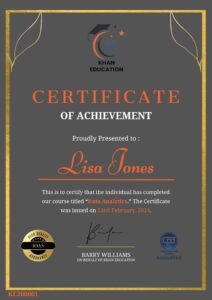
Upon completion of the course, an e-certificate will be downloadable from Khan Education signifying the completion of your course. But, the course is CPD Accredited and after you complete the assignment, you will be eligible to order a certificate accredited by CPD International Quality for £5.99 only. If you want a hardcopy certificate accredited by CPD IQ, you can get it for only £15.99.
FAQ's
At Khan Education, we have curated a selection of frequently asked questions that prospective students often pose before enrolling in our courses. We trust you will find these inquiries helpful. Should you have any specific questions not covered here, please feel free to contact us.
Enrolling in one of our online courses is a very straightforward procedure. On your interested course page, select the ‘Add to Cart’ button to add the course in your shopping cart. Subsequently, proceed to the checkout screen to input your payment details. Upon successful payment processing, you will be given access to your online course immediately. Following your enrollment, we will promptly send an email containing your course details and invoice to the address provided in your sign up.
Yes. Khan Education provides immediate access to your course materials online, meaning that you can study from anywhere in the world, provided you have a device with an internet connection. We have students spanning over 80 countries taking our courses worldwide.
Yes. You have the option to buy a course for a family member or friend. But please notify us and maintain clarity after checkout so that we can update the course details accordingly.